
Background
At the start of the year, normalising food and fuel prices shaped a favourable outlook for food producers. For producers, lower input costs supported expectations of earnings recovery and margin expansion. Strong local harvests, including record production in some crops, and favourable La Niña conditions helped ease maize, wheat and soybean prices. Lower fuel prices added to this relief, with Brent crude at US$60 per barrel by the end of 2025. That backdrop has since become more challenging for the food producers.
The tougher commodity environment
Conflict in the Middle East, which broke out in late February 2026, pushed Brent crude to highs of US$117 per barrel on 23 October 2026, raising the cost of producing and transporting food. El Niño adds pressure from the supply side. The warmer counterpart to La Niña, it typically brings hotter, drier conditions to much of southern Africa, which can reduce crop yields and lift soft commodity prices. Together, higher production costs and the risk of weaker harvests could put further upward pressure on food prices. In September 2026, the South African Weather Service (SAWS) confirmed that a strong El Niño event had formed and was intensifying. Its expected strength has prompted descriptions of a potential “Super El Niño”, with SAWS forecasting below average rainfall towards mid-summer and a high likelihood of above average temperatures. A strong event does not guarantee drought, but the risk to agricultural supply deserves attention.
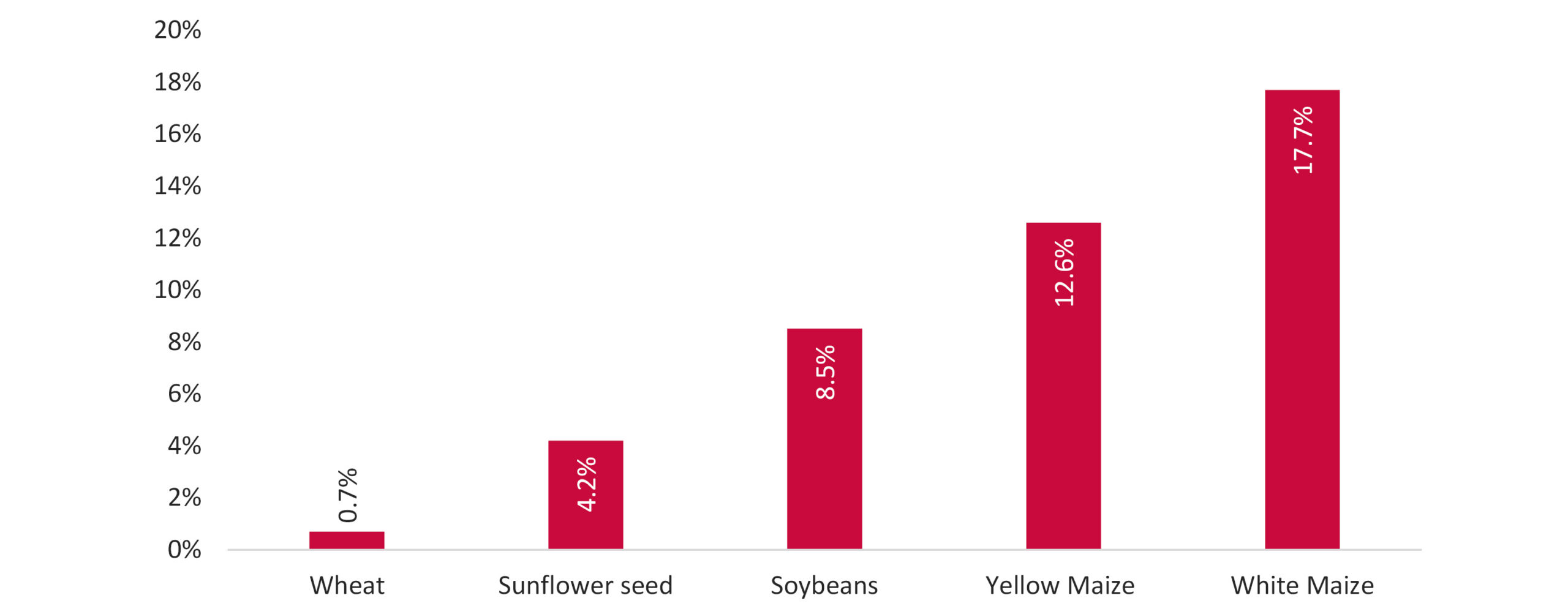
Chart 3: SAFEX commodity price increases (May 2027 futures)
Source: Bloomberg | as of 17 November 2026 versus 17 February 2026 for contracts expiring in May 2027
The increases in Chart 3 show that local commodity prices have already moved higher. Between 17 February and 17 November 2026, SAFEX spot prices rose by 9% for soybeans and 18% for white maize. Several influences lie behind these movements, so they should not be attributed to El Niño alone. Many industries will feel these changes, but food producers sit at their epicentre. We see opportunity in businesses whose operational improvements and competitive strengths can support future earnings, and where share prices offer sufficient value to compensate for the cyclical risks.
Food producers
Our picks: Tiger Brands and Premier, supported by self-help opportunities
For food producers, the challenge is straightforward. Fuel raises manufacturing and distribution costs, while higher grain prices increase the cost of ingredients. Companies can absorb the increases or pass them on to customers. Neither is painless. Absorbing costs reduces profits, while raising prices risks losing sales as households stretch already tight budgets. Manufacturers’ selling prices have remained subdued despite these pressures. Stats SA recorded a small annual decline in food manufacturers’ selling prices in September 2026. This does not mean their costs are falling. It means we need to look closely at how much they can save internally and how much they must eventually recover from customers.
We have seen these pressures before, although their causes differ. The 2015/16 drought lifted local food prices despite falling international oil prices. In 2022/23, Russia’s invasion of Ukraine disrupted both energy and agricultural markets. Today, the timing matters as much as the direction of prices. Existing inventory and purchasing agreements can delay the impact, giving management some time to respond.
Tiger Brands: An experienced operator and scope to improve the cost base
At Tiger, Tjaart Kruger’s experience supports our confidence in the turnaround. He led Premier from 2011 to 2021 before returning to Tiger in November 2023. We believe the market may underestimate the relevance of his knowledge of milling and baking. He understands the economics of turning grain into flour and bread, and where better execution can make a difference.
Tiger’s Milling and Baking division, which includes wheat milling and Albany bread, has already improved its profitability. However, lower wheat prices and changes in the businesses included in the division also helped. We therefore cannot attribute all the improvement to management’s actions. The investment case depends on further progress that can last beyond a favourable commodity cycle.
Its Super Bakery is a new industrial bread production facility for Albany in Pretoria. It is designed to reduce production costs per loaf and provide capacity for growth. Commissioning is expected later into 2027, subject to municipal approvals. Manufacturing consolidation and changes to distribution offer further scope to improve efficiency. Tiger has also targeted another R500 million in savings over two years. For scale, this equals approximately 1.5% of FY2025 annual revenue of R34.4 billion. Some benefits may be absorbed by higher fuel costs or reinvested in competitive pricing. Nevertheless, reducing the cost of producing and delivering food should leave Tiger better placed to compete.
These are improvements within management’s control. They do not depend on a good harvest or falling oil prices, although project delays and weaker demand could slow their contribution to earnings. That distinction is important to our investment case.
Premier FMCG: Bakery efficiencies and the RFG opportunity
We like Premier for the efficiencies from its bakery investments and the opportunity to improve the combined business following its acquisition of Rhodes Food Group (RFG). We believe these opportunities offer a runway for earnings improvement over the next three to four years.
Premier is further along with its bakery investment. Its Aeroton bakery in Johannesburg is now in full production. The investment improves efficiency and expands capacity, allowing Premier to consolidate production from smaller, older bakeries. Commissioned in March 2026, it is designed to improve efficiency and expand capacity in the inland market. The focus now is on making full use of the investment, with sales volumes determining how much of that capacity is used.
Rhodes Food Group (RFG), a producer of packaged foods including canned fruit, vegetables and ready meals, adds another opportunity. The acquisition was completed in March 2026. Combining the businesses creates scope to buy ingredients more efficiently, share logistics and distribution infrastructure, and improve operations. Management expects annual savings of R100 million to R150 million once these benefits are fully realised.
The acquisition also broadens Premier beyond milling and baking. RFG now forms its Culinary business within Groceries, which also includes sugar confectionery and personal care products. This gives Premier more ways to grow, although delivering the benefits will require careful integration and continued attention to the underlying businesses.
A bigger business is not automatically a better one. We will look for evidence that the combination is reducing costs and supporting earnings, rather than relying on the acquisition alone to create value.
Conclusion
El Niño and higher fuel prices make the outlook for food producers more difficult. The soft commodity joyride has ended, but the opportunities within these businesses have not. Tiger and Premier have identifiable ways to improve how they manufacture and distribute food.
Higher costs may delay the benefits, and management still needs to deliver. Our conviction rests on improvements that can support earnings beyond this summer, together with the price we pay for them. We are backing businesses with the scope to become more competitive through the cycle.